
In-ground termite bait stations work by burying slotted plastic cylinders in the soil around your house, letting foraging worker termites find the cellulose inside, then swapping that cellulose for a slow-acting chitin synthesis inhibitor which the workers carry home and share mouth-to-mouth until the whole colony collapses. That’s the entire mechanism in one breath. No trenching, no drilling through your parquet, no flooding 200 litres of termiticide under your foundation.
Sounds elegant. And it is, when it works.
But I’ll be honest with you upfront, because too many pest control quotations in Singapore are sold like they’re magic: baiting is a patient man’s game. It rewards early detection and punishes procrastination. If you already have mud tubes creeping up your gate pillar and hollowed skirting near the kitchen, a bait station alone is not going to save that timber this month.

How Do In-Ground Termite Bait Stations Actually Work?

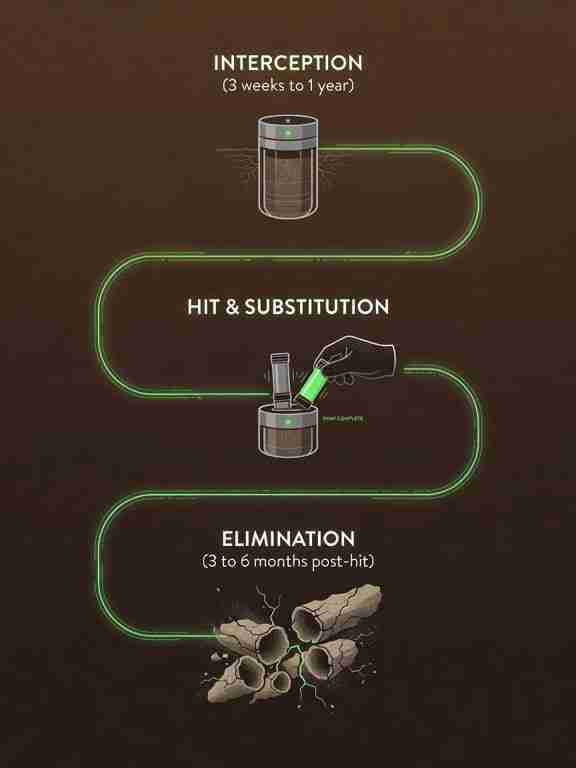
Three phases. Interception, substitution, transfer. Every legitimate termite baiting system on the market, whether it’s Sentricon, Trelona, Exterra or the Rentokil colony elimination professional programme, runs on this same skeleton.
Interception Phase
Subterranean termites are blind. They don’t smell your house from 20 metres away and march over. They forage semi-randomly, tunnelling through soil in search of cellulose, and as the NC State Extension guide on termite baiting systems explains, the workers stumble onto an in-ground station the same way they’d stumble onto a tree root.
So the first phase is just waiting. The station holds untreated wood or a compressed cellulose matrix. Bait, but not poisoned bait. A monitoring station, essentially, doing nothing but sitting there smelling like dinner.
Bait Substitution
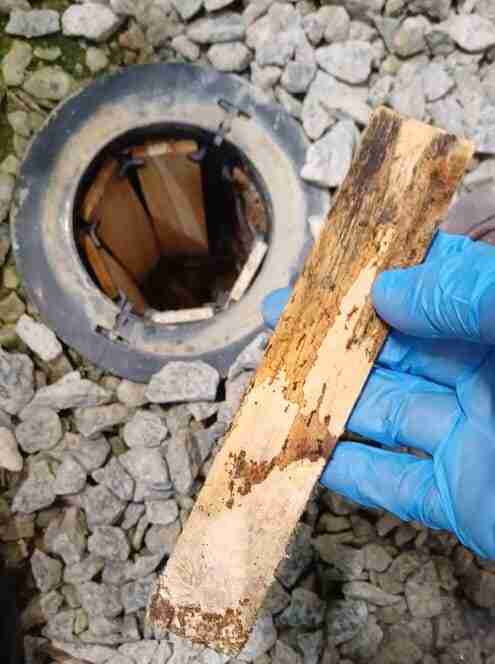
Once a technician lifts the cap and finds mudding, chewed matrix, or live termite workers chewing the insert, that station is “hit”. Now the active ingredient goes in.
The actives are insect growth regulators, mostly chitin synthesis inhibitors. Slow by design. University of Kentucky’s homeowner guide on termite baits is blunt about why: a fast-acting termiticide kills the forager at the station and the colony simply seals off that gallery and forages elsewhere. Slow means the poison travels. Commercial formulations sit at low concentrations, around 0.5% noviflumuron or 0.25% diflubenzuron depending on the product line, according to bait research summarised by UC ANR.
Colony Transfer
Here’s the part that still impresses me after all these years. Termites feed each other. Trophallaxis, mouth to mouth, forager to nymph to soldier to the ones that never leave the nest. Origin Exterminators’ breakdown of trophallaxis transfer in Singapore describes it well enough that even sceptical clients get it.
The inhibitor blocks moulting. Workers can’t form new exoskeletons, so they die at their next moult, roughly a three-month window as Florida’s IFAS work on Formosan colonies documents, and once the worker caste thins out nobody feeds the king, queen and soldiers. Reproductive starvation. The nest doesn’t get bombed. It gets defunded.
Why Placement Around The Perimeter Matters

Placement is where most cheap jobs fall apart. Stations installed for the invoice, not for the termites.
Spacing And Depth
Standard protocol from the University of Florida’s Sentricon installation specifications calls for augered holes roughly 5 cm wide and 30 cm deep, with stations spaced about 3 metres apart along the perimeter, cap flush with the soil so nobody trips or mows over it. On a typical Singapore intermediate terrace you might only get 12 to 18 stations. A bungalow in Bukit Timah with a big garden? Could be 30 plus.
Moisture And Shade Spots
Termites in our climate love the damp shade. Aircon condensate drip lines, the back of the boundary wall, under the frangipani, beside the koi pond overflow, that permanently soggy patch behind the outdoor tap. Those are your high-probability sites. Missouri Extension’s pest bulletin on hidden feeding habits notes how drying soil shifts foraging deeper and toward moisture, which is exactly why dry decorative gravel strips are lousy station locations.
Common Placement Mistakes In Landed Homes
- Skipping the interior courtyard and lightwell because it’s “inside” (Coptotermes gestroi doesn’t respect your floor plan).
- Installing along the front driveway only, where it’s easy to auger, leaving the shaded rear untouched.
- Placing stations more than a metre from the building line, out past the apron drain, so foragers hit the foundation first.
- Burying stations where the gardener’s monthly digging disturbs them, breaking the very natural foraging behaviour you’re trying to exploit.
What Happens During Each Inspection Cycle
Monitoring Visits
Every six to twelve weeks for most programmes in Singapore, monthly for the first few cycles on high-pressure sites. The technician opens each cap, checks the insert, records observations, notes moisture and any soil disturbance. Some operators now layer on electronic sensing, an idea Florida researchers floated two decades ago when they trialled electronic termite detection to replace guesswork, and a few local firms market microwave termite detection technology for checking wall voids alongside the ground stations.
Hit Confirmation
A “hit” needs live termites or unmistakable feeding, not just a bit of mould. This matters because premature baiting wastes active ingredient and, worse, lulls you into thinking the colony is engaged when it isn’t.
Refill And Replacement
Bait gets consumed. Fast, sometimes. A vigorous Coptotermes colony can strip a cartridge in weeks, so refills continue until feeding stops. Cracked housings, water-logged cylinders, ants colonising the station: all replaced. This is the recurring cost nobody highlights in the sales pitch.
How Long Before You See Results?
Interception Timeline
Anywhere from three weeks to a year. UMass Amherst’s report on controlling termites notes foraging delays of six months to a year in cooler soils; our tropical soil temperatures compress that, but interception is still probabilistic, not scheduled.
Elimination Timeline
Once feeding is sustained, expect three to six months to colony collapse. Nan-Yao Su’s original hexaflumuron field work, which the University of Florida documented at St. Croix, showed under a gram of active ingredient wiping out nests of millions. Tiny doses. Long timelines.
Signs Of Progress
Feeding rate drops. Fewer live workers per station. Soldier-to-worker ratio goes odd. Alates stop appearing after rain. Mud tubes go dry and brittle.
Bait Stations Versus Soil Barrier Treatments
| Factor | In-ground bait stations | Liquid soil treatment |
| Action speed | 3 to 6 months post-hit | Days to weeks at the treated zone |
| Kills the colony? | Yes, colony elimination | Usually repels or intercepts, colony may survive |
| Chemical volume | Under a gram of active ingredient per colony | Hundreds of litres of termiticide |
| Disruption | Minimal digging | Drilling, trenching, rodding |
| Ongoing cost | Recurring inspections and refills | One treatment, 5 to 8 year warranty |
| Best for | Prevention, early activity, chemical-sensitive households | Active structural infestation, pre-construction |
Speed And Coverage
Liquid termiticides give you a continuous treated zone almost immediately. Baiting gives you nothing until a forager finds a station.
Chemical Exposure
The trade-off runs the other way here. UC IPM’s notes on subterranean termite management flag the low mammalian toxicity of growth regulators against wide-scale trenching, and the EPA registered hexaflumuron as its first reduced-risk pesticide, which tells you something.
Best-Fit Scenarios
Prevention on a clean property, baiting. Live infestation eating your staircase stringer, liquid plus direct above-ground bait. Both, honestly, for high-value landed homes.
Limitations Nobody Tells You About

Variable Interception Rates
Soil type, drainage, competing tunnels, all of it swings interception. Industry surveys on tropical pest management highlight that in-ground bait stations suffer from low interception reliability compared to targeted above-ground placements.
Competing Food Sources
Your compost heap, old timber formwork buried by the developer, dead rain trees along the road. Free buffet. Your station is just one option among many.
Active Infestations Need More
Blind foragers may take months to find a station while the colony is already chewing your wooden flooring. Above-ground stations placed directly on active mud tubes solve this. Insist on them.
Choose Between DIY Kits And Professional Systems
DIY monitoring stations are legal and cheap. The actives are not. Chitin synthesis inhibitor cartridges are restricted to licensed operators in Singapore, so a homemade setup detects but cannot treat. Fine as an early warning tripwire on a big garden. Useless as control.
What Baiting Costs And What Affects The Price

IG stations → cheaper to start, but you keep paying every year for monitoring and bait replenishment.
Soil treatment → A higher initial upfront investment for the trenching and injection labour, followed by a much lower annual bond fee to keep your property warranty active.
In-ground bait stations require an initial investment of $1,500 to $3,500 for installation, followed by ongoing annual maintenance fees of $250 to $500 for professional monitoring and bait replacement.
Liquid soil barriers require a larger initial investment of $2,000 to $6,000 depending on the amount of trenching and concrete drilling needed.

While liquid barriers protect the soil for 5 to 7 years, homeowners usually pay an annual termite bond renewal fee of $150 to $400 to keep their active damage-repair warranty alive.
(Actual prices and protocols vary between companies and may change over time due to labour costs, chemical prices, inflation, and building conditions.)
What To Do If Termites Return After Baiting
Re-infestation usually means a different colony, not a resurrection. Ohio State’s extension notes on soil movement creating gaps in liquid barriers explain why perimeter chemistry fails too. Get a fresh inspection, add stations at the new hot spot, consider supplementing with a targeted perimeter soil treatment. Integration beats loyalty to one method.
FAQ
Do in-ground bait stations attract termites to my house?
No. They intercept what’s already foraging within metres of your foundation.
Are in-ground baiting stations effective for drywood or dampwood termites?
No. In-ground (IG) stations are designed exclusively for subterranean termites, which tunnel through garden soil searching for food. Drywood termites live inside dry timber (with no soil contact), and dampwood termites live inside wet, rotting wood. Because neither species typically forages through topsoil, neither will enter an in-ground station. Drywood infestations require localized timber treatments or fumigation, while dampwood infestations are resolved by fixing moisture leaks and replacing rotted timber.
Are in-ground bait stations effective for high-rise buildings?
No. In-ground (IG) stations are designed for ground-level perimeter soil protection. If termites are in an upper-floor unit, they are either living in an independent aerial nest (with no ground connection) or travelling through central building utility shafts from the ground. In either case, burying stations in the exterior garden downstairs won’t intercept them—termites actively feeding in your apartment, office, or commercial space etc. won’t randomly wander into garden soil stations. High-rise infestations require Above-Ground (AG) bait stations mounted directly onto live mud tubes inside your unit.
Should I get in-ground or above-ground baiting stations?
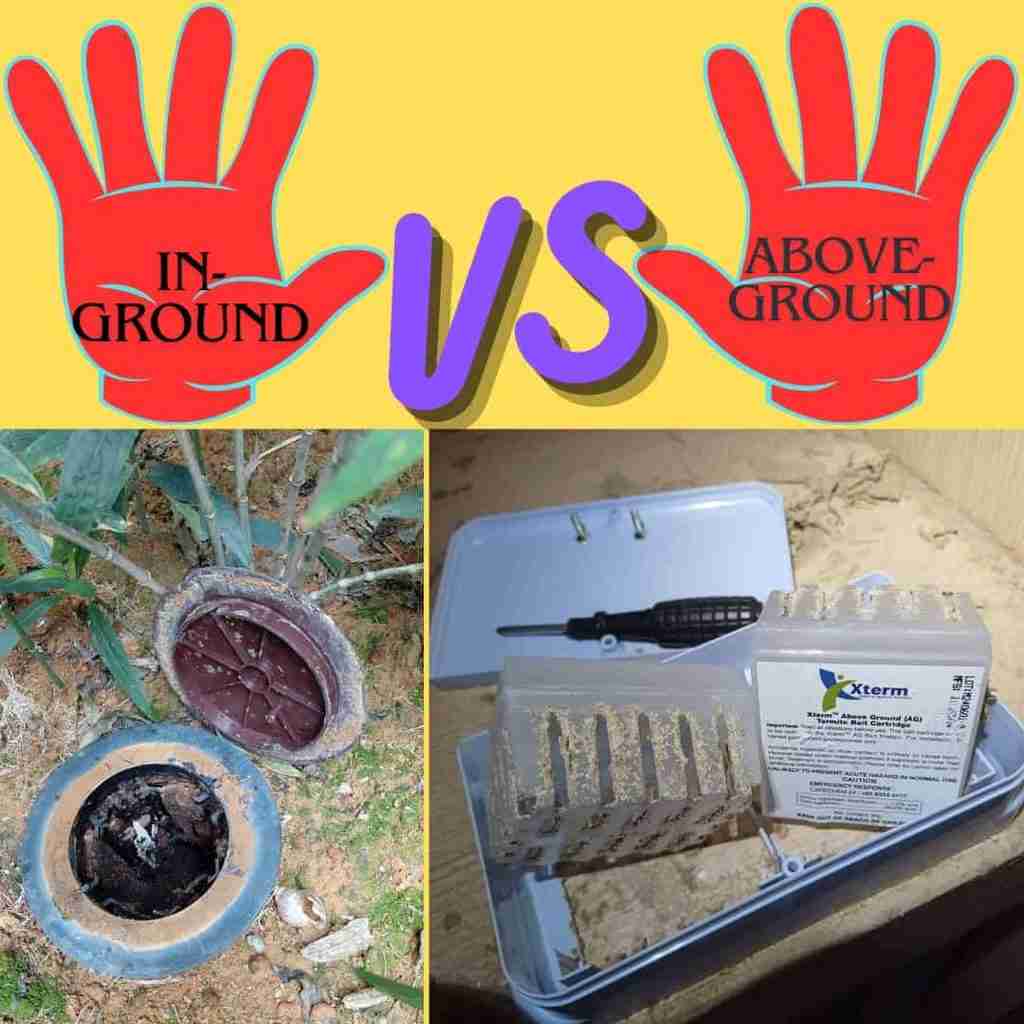
It depends on whether you’re playing defence or offence. In-ground (IG) stations sit outside waiting for foraging termites to stumble upon them. But if termites are already chewing through your kitchen skirting, waiting for them to wander back outside to find a ground station takes too long. You need above-ground (AG) stations slapped straight over their active feeding galleries right now.
Is it better to combine baiting stations with a liquid soil barrier treatment?
Yes, if your budget allows. Combining both creates a two-layer defence system—liquid termiticides create an immediate shield around your foundation to protect the building, while in-ground bait stations act as perimeter tripwires to intercept foraging workers and eliminate the underground colony at its source. It is a more comprehensive strategy for high-value landed homes. Just ensure your technician uses a non-repellent termiticide; older repellent chemicals will drive termites away from the soil where your bait stations are buried.
Safe for dogs and kids?
Caps lock. Actives sit inside. Low mammalian toxicity.
Can I skip inspections to save money?

Then you own decorative plastic tubes.
Can I install both In2Care mosquito stations and in-ground termite stations in the same garden?

Yes—they complement each other exceptionally well. Both rely on “Trojan Horse” technology, using the pests themselves to transport active ingredients back to hidden breeding or nesting sites. Because neither system uses broad-spectrum chemical sprays, In2Care allows you to suppress Aedes mosquito populations without spraying toxic repellents near your in-ground termite stations, preserving the performance of your exterior termite barrier.
Conclusion
Bait works. Slowly, quietly, thoroughly, and only if somebody keeps showing up to check. Catch termites early and it’s the smartest tool you have. Wait until the parquet drums hollow, and you’ll need chemistry too.